Before nursing students at The University of Alabama ever step into a hospital room, they learn the basics of patient care in the Capstone College of Nursing’s Simulation Center, where they respond to medical emergencies and collaborate with interdisciplinary health care teams in realistic clinical scenarios.
The Simulation Center gives students the opportunity to apply classroom knowledge in realistic clinical environments before caring for real patients. Through high-fidelity patient simulators, standardized patients, virtual reality and artificial intelligence-powered learning experiences, students strengthen their clinical judgment, communication skills and confidence while preparing for careers in health care.
Watch nursing students develop lifesaving skills
Learning by Doing
For Dr. Heather Cole, assistant dean of simulation, the center’s greatest strength is giving students the opportunity to practice before caring for real patients.
“The Simulation Center is a place where students can come in and learn in a controlled environment before ever going to the hospital,” Cole said. “They interact with patients, work with simulators and standardized patients, and develop the skills, communication and empathy they’ll need before that first patient encounter.”
Simulation is integrated throughout the nursing curriculum. Students begin by developing foundational skills in the Clinical Practice Laboratory, where they practice procedures such as IV insertions, IM injections, catheter placement and patient assessments. As they progress through the program, those individual skills are combined into increasingly complex patient scenarios that require critical thinking, collaboration and clinical decision-making. Students also gain experience in specialty spaces, including a home health suite that prepares them to care for patients outside the traditional hospital environment.
Recent graduate Unique Williams said those early experiences helped establish the foundation for her nursing education.
“We spent a lot of time developing the foundational skills every nurse needs, including conducting patient assessments and delivering hands-on patient care,” Williams said. “Those experiences gave us the confidence to continue building our clinical skills throughout the program.”
Building Confidence Through Experience
As students advance through the program, simulation scenarios become increasingly complex, allowing them to apply their knowledge in situations that closely resemble those they’ll encounter in hospitals and clinics.
“It’s important for us to get down the basics of patient care so that when we step into the hospital we understand what to do,” Williams said.
Cole said repetition is one of the most valuable aspects of simulation-based education.
“The whole foundation of simulation is experiential learning,” she said. “The student gets to practice, they receive feedback, and they do it again.”
Faculty members guide each simulation from a control room, where they voice the patient and adjust scenarios in real time based on students’ clinical decisions.
“The faculty member is in the control room, and they can voice the patient and change the progression of the simulation,” Cole said.
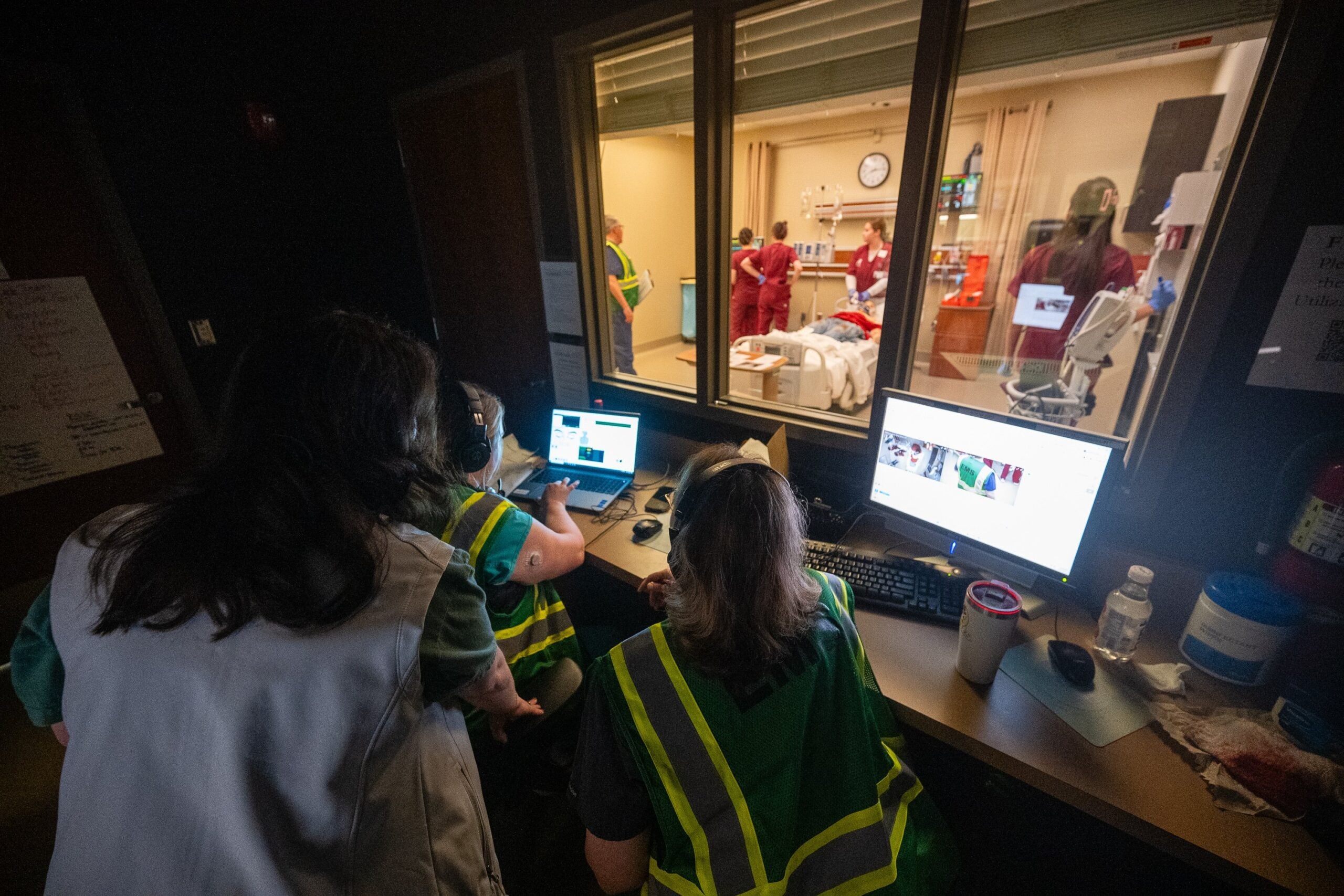
Williams said the realistic scenarios helped prepare her for clinical rotations by teaching her how to think critically, prioritize patient care and remain confident in fast-paced situations.
“It really prepares us for anything that’s coming our way,” she said. “We know what to expect, what to look for, and the different steps to take.”
Caring for the Whole Patient
While students develop technical skills, they also learn one of nursing’s most important responsibilities: building trust with patients and their families.
“It really taught me how to interact with patients,” Williams said. “You have to be calm, you have to be reassuring.”
Cole said communication is just as important as clinical knowledge.
“A lot of our students come in and they’ve never been at the bedside,” she said. “It really gives you an opportunity to practice that communication before getting to the hospital. Simulation really brings the human side to nursing education.”
Preparing Future Nurses
Every experience inside the Simulation Center is designed with one goal in mind: preparing graduates to provide safe, compassionate, high-quality patient care.
“The main goal of simulation is patient safety,” Cole said. “Our goal is to create competent nurses.”
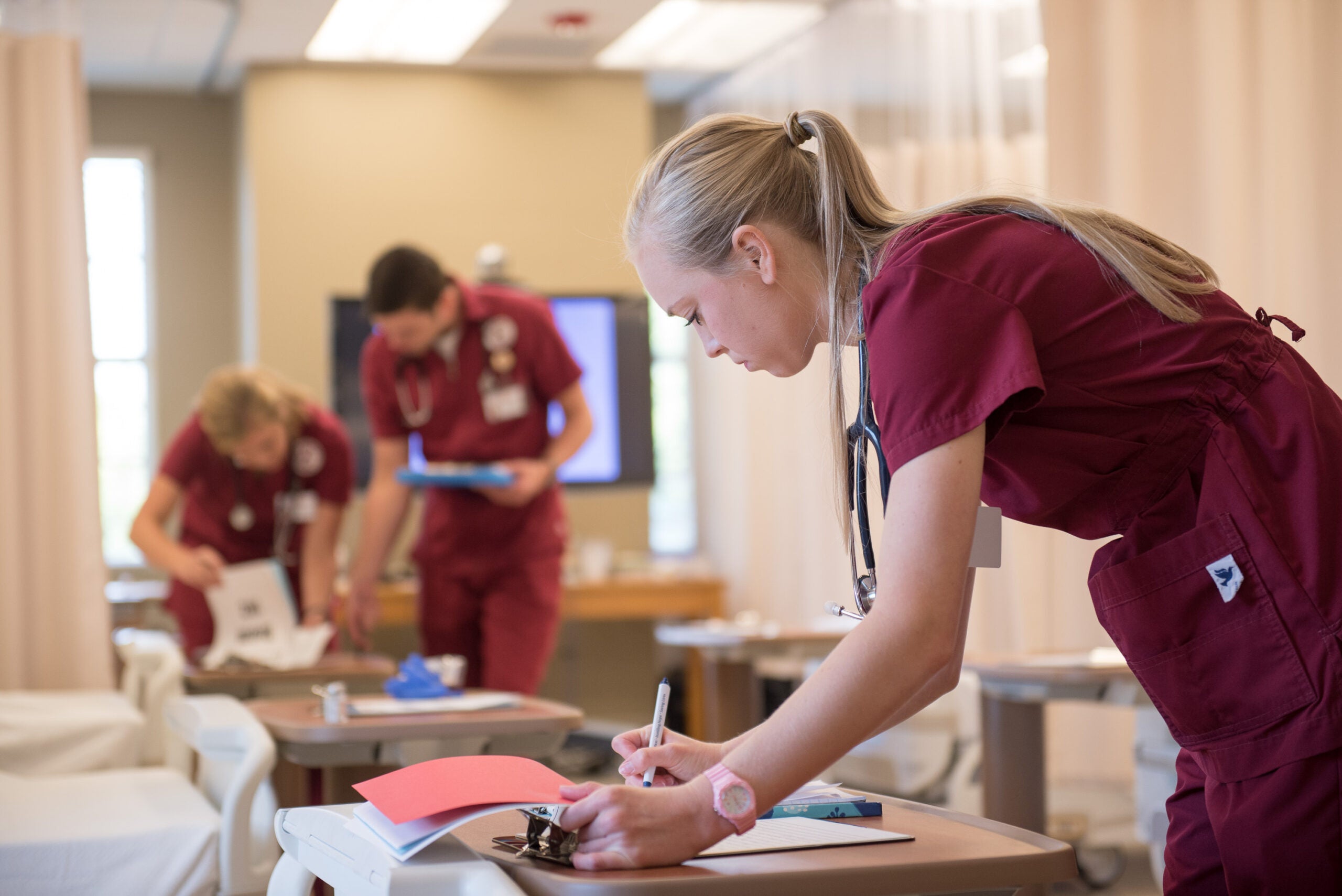
Williams, who plans to begin her career in pediatric cardiac care, said the Simulation Center gave her the preparation and confidence she needed to take the next step in her nursing career.
“My experiences in the Simulation Center have really prepared me for what’s next,” Williams said. “I’ve learned how to care for patients, communicate during challenging situations, and stay calm under pressure. Those experiences have given me the confidence to begin my career.”
For Cole, the lessons students learn extend far beyond graduation.
“I hope they never stop learning,” she said. “I really just hope that our students continue to professionally grow, and they never stop learning.”