Feb. 2-6 is Severe Weather Awareness Week in Alabama
Tornadoes are among the most dangerous and destructive weather events that affect Alabama, capable of producing violent winds, widespread damage and life‑threatening conditions in a matter of seconds.
A tornado is a violently rotating column of air that contacts the ground, typically descending from thunderstorms, with wind speeds ranging from 65 mph to more than 300 mph.
In Alabama, tornadoes can occur during any month, however, they most frequently occur in the spring from March through May, and in the fall from November through mid-December.
Tornado Watches vs. Warnings
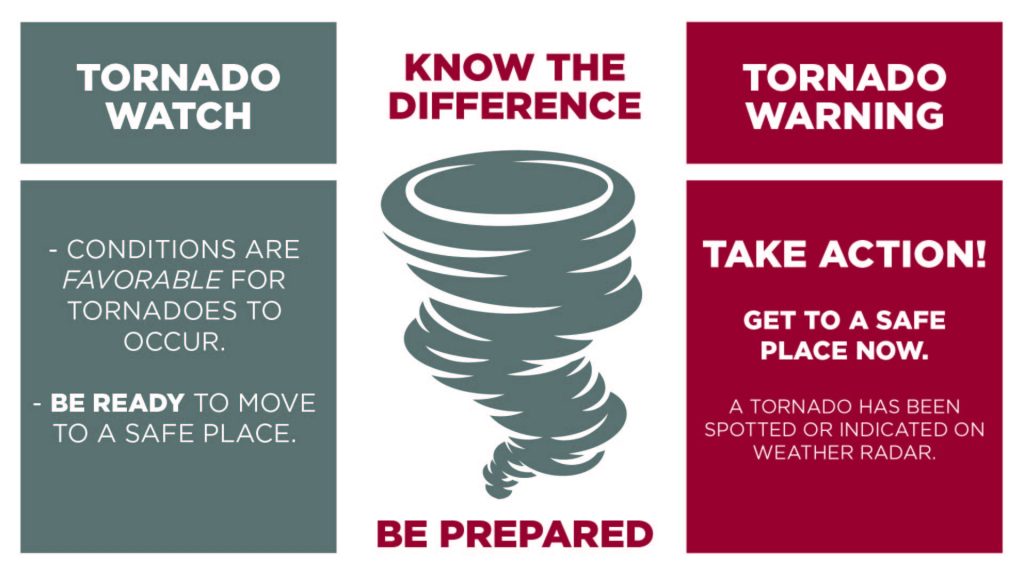
Knowing the difference between a tornado watch and a tornado warning is essential for safety.
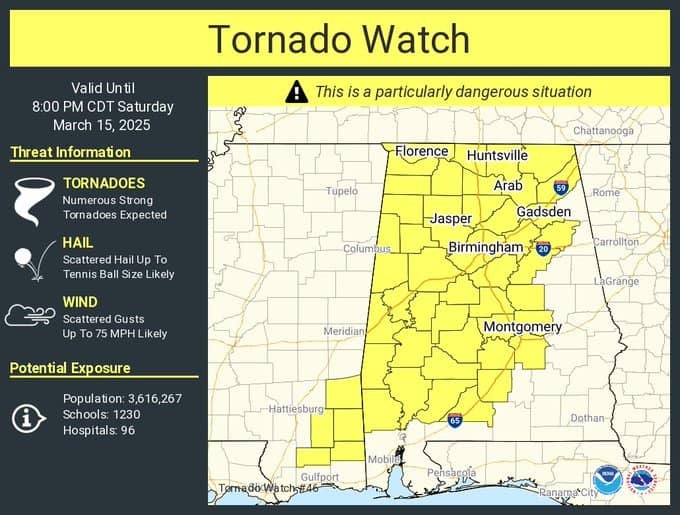
A tornado watch means conditions are favorable for tornadoes to develop. They usually cover a broad area and last for several hours, giving you time to review your safety plans. While the sky may appear calm, remember weather can change rapidly. Stay aware of weather conditions during a tornado watch. Be prepared to go to a storm shelter, Best Available Refuge Area (BARA), or other safe place if a tornado warning is issued.
A tornado warning means a reliable source has seen or radar has detected a tornado. The National Weather Service issues these warnings for small areas that typically last less than an hour.
Seek shelter immediately when a tornado warning is issued for the UA campus area.
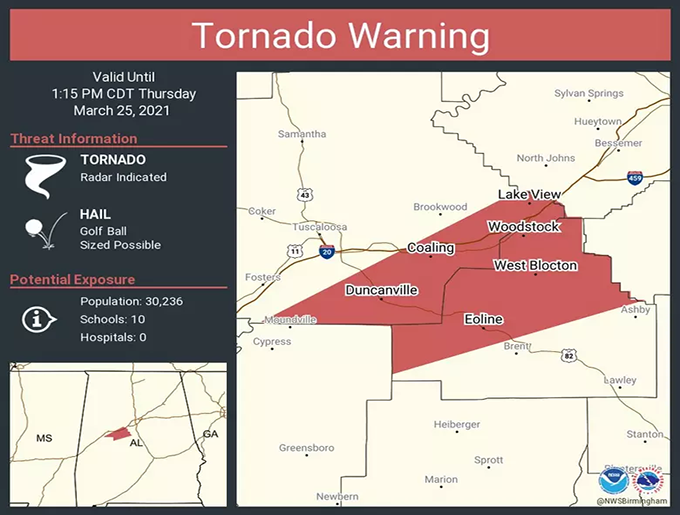
A UA Alert will be sent when a tornado watch or tornado warning is issued that includes the UA campus.
Sheltering
The University opens multiple campus storm shelters when the National Weather Service issues a tornado watch and keeps them open until the watch expires or is canceled. These include the East Campus Storm Shelter, Greek Assembly Hall Storm Shelter, Hewson Hall Storm Shelter, John H. England Jr. Hall Storm Shelter, North Campus Storm Shelter, North Lawn Hall, Drummond Lyon Hall Storm Shelter, Julia Tutwiler Hall Storm Shelter, Magnolia Best Available Refuge Area, Capstone Best Available Refuge Area, and the University Services Community Safe Room.
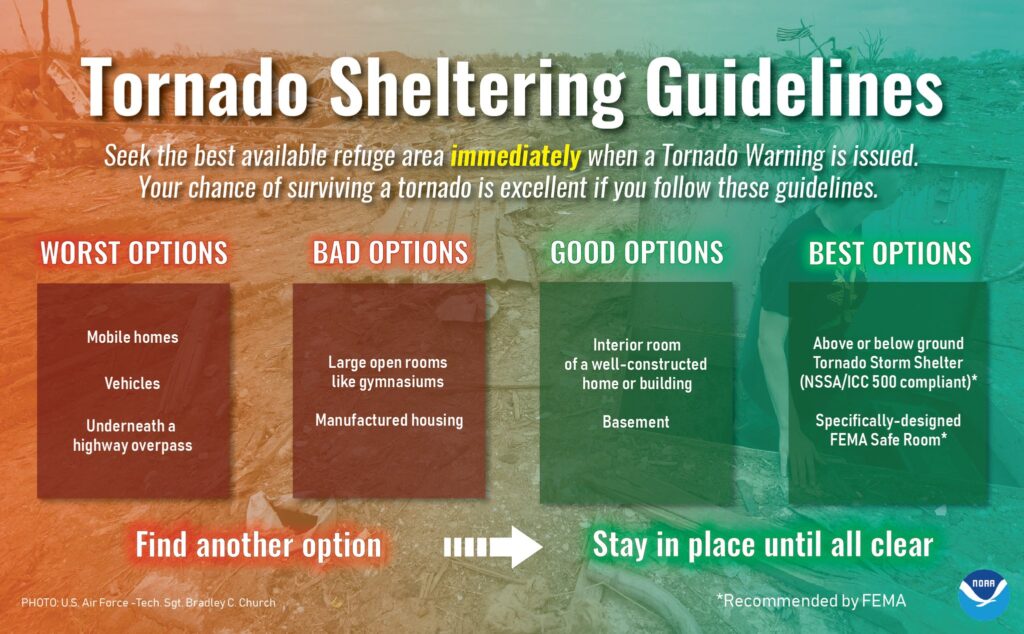
If you are unable to get to a campus storm shelter, Best Available Refuge Areas, or BARAs, have been identified in campus buildings. A BARA is the best place in that building to shelter during a severe storm.
If you live off campus, storm shelters are located throughout Tuscaloosa County. Visit the Tuscaloosa County Emergency Management Agency’s website to find the closest storm shelter to your home.
If you stay in your home during a tornado warning, move to the lowest level and place as many walls as possible between yourself and the outside. Interior hallways, closets or bathrooms without windows offer the best protection.
If you live in an upper-floor apartment, move to the lowest floor of your apartment building. Crouch under an indoor stairwell or in an interior windowless hallway. Do not seek shelter in a vehicle or mobile home.
This story continues the series helping the UA community stay informed and prepared for severe weather throughout the year.