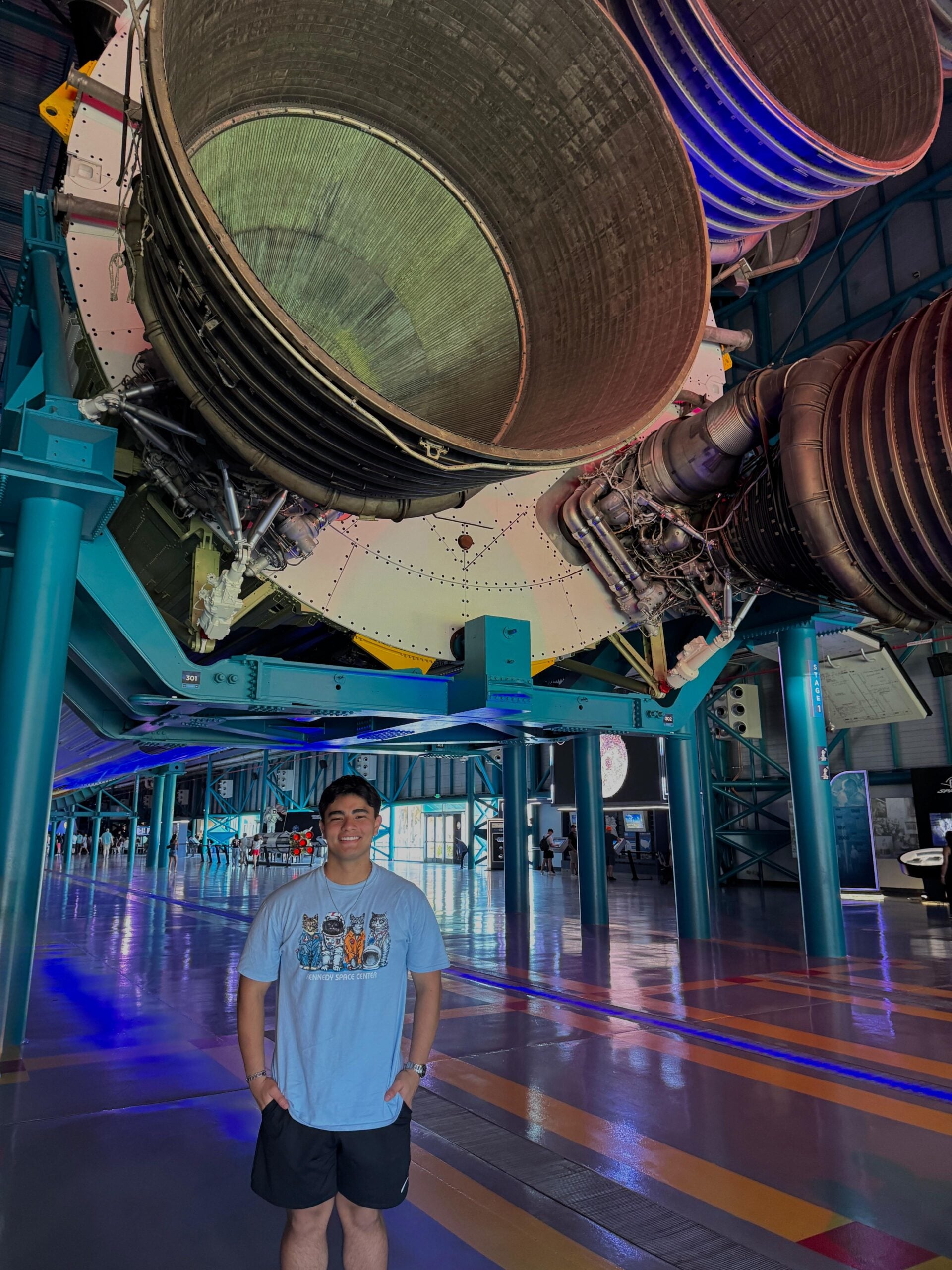
Fernando Salinas is no stranger to taking a chance on a new experience. As an international student from Honduras, he has been navigating a new environment since his first day at The University of Alabama. After two years, he had found his footing.
This summer, Salinas jumped into a student research experience that made him a beginner all over again. As the only engineering student among physics undergraduate and graduate students in the International Space Weather Camp, he felt out of his depth at first.
“They literally said open your computer, launch Visual Studio Code and start gathering data,” he said. “And I thought ‘Okay, how do I do that?’”
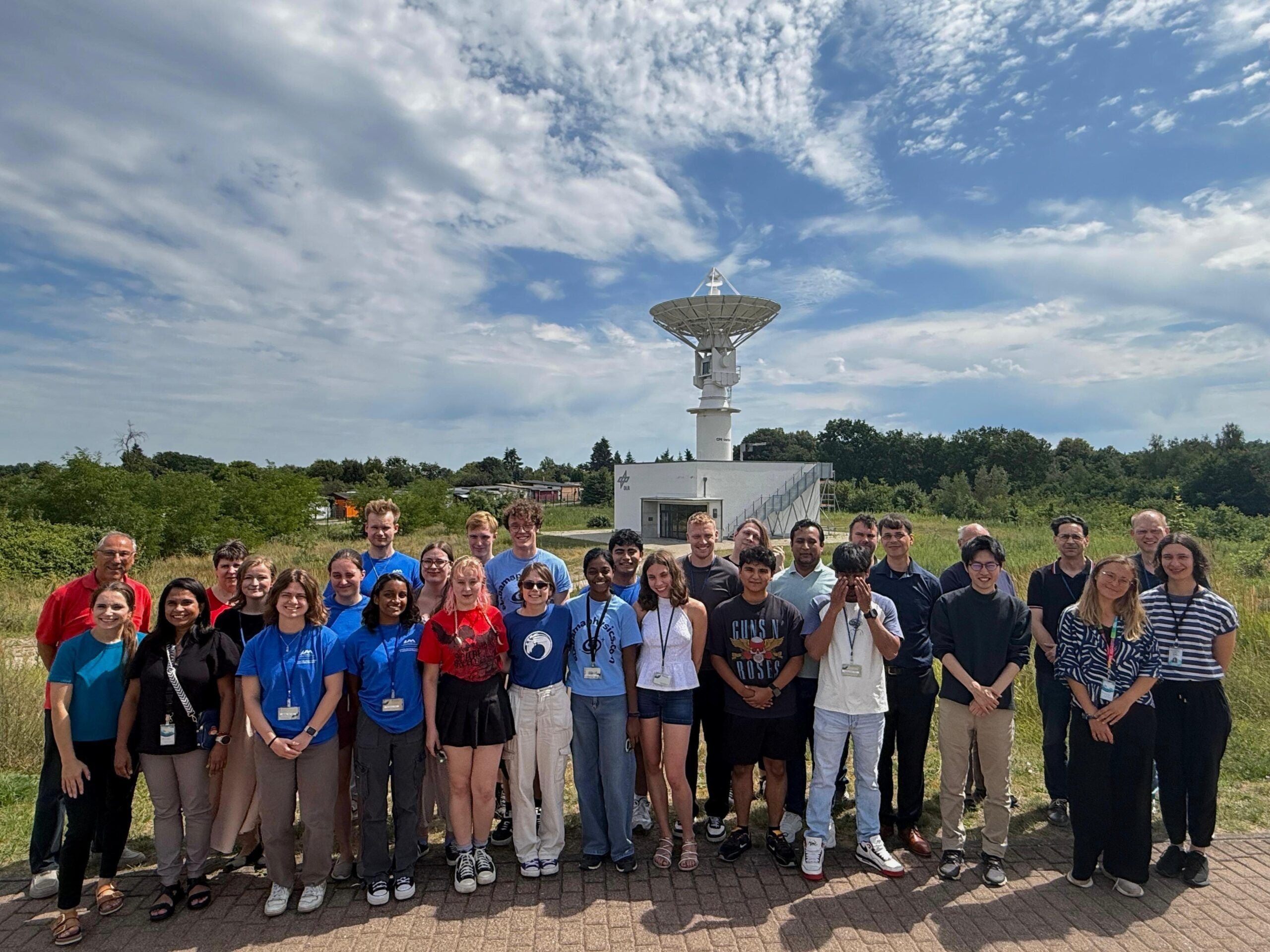
The International Space Weather Camp selects eight U.S. students each year and pairs two weeks in Huntsville with two weeks at the German Aerospace Center in Neustrelitz, Germany. Students learn about the niche field of space weather and complete two research projects alongside other students from American and German universities.
Salinas, a current junior in the aerospace engineering department, knew almost nothing about space weather before applying to the program — including that it exists as a field of study. However, he found most aerospace summer internships were with defense contractors or agencies, and they weren’t open to international students.
So he widened his search to include programs that were more research than hands-on and applied to several that he might not have considered otherwise. Taking a chance on opportunities that were outside his comfort zone was the right choice.
“When I got a call from the program supervisor for the International Space Weather Camp, I said yes right away,” Salinas said. “It was two weeks before the end of the semester, and I was so excited. I’m still excited about it today.”
Teaching a model to anticipate risk
Space weather, broadly, is the activity around the sun’s surface and how that activity affects everything around it. One of the reasons scientists study space weather is its potential to disrupt technology on Earth.
Particularly intense solar storms can produce coronal mass ejections, solar eruptions that push a mass of radiation and charged particles into space. If the CME happens on the side of the sun facing Earth at the time, the resulting geomagnetic storm can disrupt telecommunications and even knock satellites out of orbit.
As with Earthside weather, one of the main goals is prediction.
Currently, scientists only know a CME is coming after it arrives.
“We know they’ve reached Earth because of the disturbances they make on our radars and antennas,” Salinas said. “But we want to be able to predict these disturbances before they actually reach Earth.”
All of the Space Weather Camp students completed two research projects. For his first project, Salinas chose one that used machine learning to process data and measurements from space to look for patterns preceding known CME events.
“We worked with a public database that had more than 20 million values,” Salinas said. “So the first part of the project was to condense that to the data we really needed.”
From there, they used machine learning to identify patterns that could later predict CMEs with the potential to disrupt technology. One of the great things about this project, Salinas said, was that they used a previously published study to validate their approach and results.
“With more data we were able to get maybe 5 or 10% better results,” he said. “Validating and building on existing research like that felt like a great achievement.”
A forensic approach to space weather
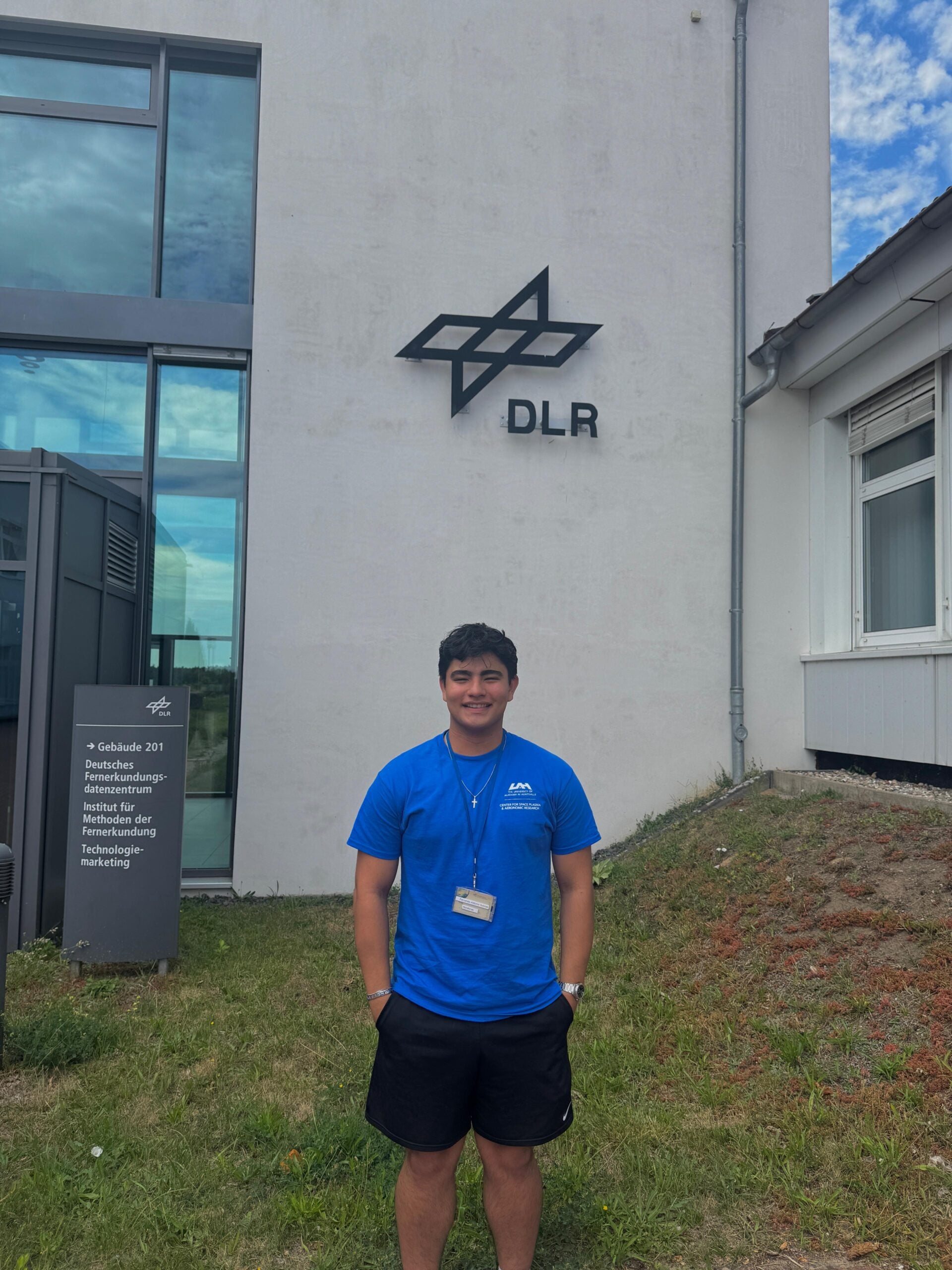
After two weeks in Huntsville, the program picked up again in Neustrelitz at the German Aerospace Center, a facility with massive antennas and data-gathering equipment. For this leg of the program, Salinas chose a research project that worked with a case study, reconstructing details about a famously destructive geomagnetic storm.
“It’s called space weather event forensics,” he said. “I felt like Sherlock Holmes.”
The Mother’s Day storm of 2024 was one of the most powerful geomagnetic events since 1989, producing aurora borealis that was visible into the southern United States and disrupting many satellites.
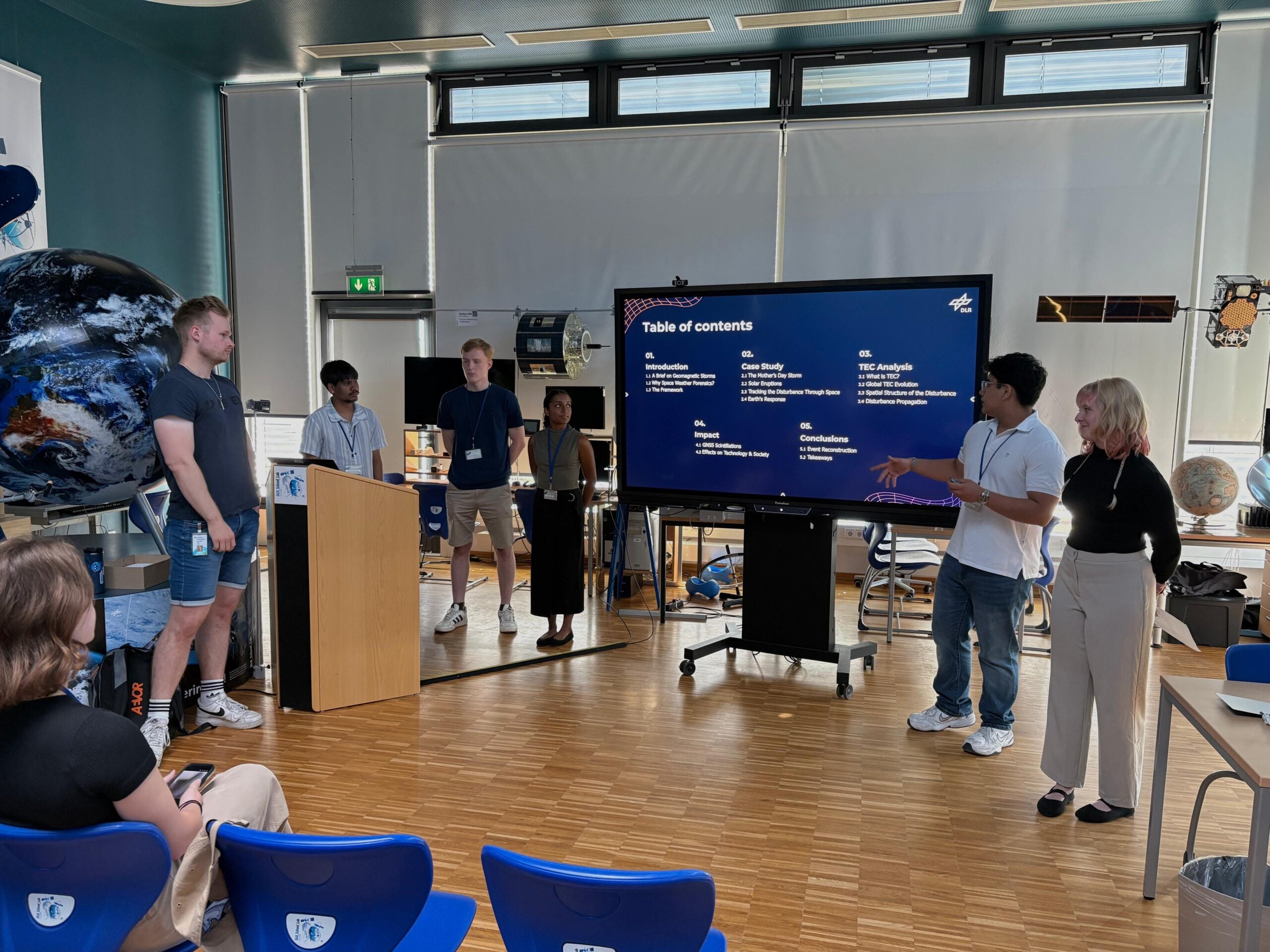
Using public databases, the team examined the data around multiple solar flares, one particularly large coronal mass ejection, and the effects on Earth’s atmosphere.
“So we gathered all this ‘evidence’ and then reconstructed the sequence of events,” Salinas said.
The group plotted their findings on a variety of graphs and maps that show how the storm “walked through the ionosphere.”
Learning Across Disciplines and Languages
While nearly everything about International Space Weather Camp presented Salinas with the opportunity to learn something new, the experience emphasized the value of collaboration.
“I had a lot of good group partners,” he said. “Especially my roommate, Florian.” Because he was the only engineering student, full participation involved some late nights trying to brush up on the skills he needed for each project. His roommate often helped him with that, and Salinas brought engineering skills the team leaned on in return.
Salinas was also in a unique situation when it came to communication, as he and the German students were all speaking in their non-native languages.
The international aspect of the program reinforced something Salinas has long believed.
“I believe aerospace, and everything that has to do with space, is an international field,” he said. “It isn’t something that only concerns your country or your region, and it is something that should be shared.”