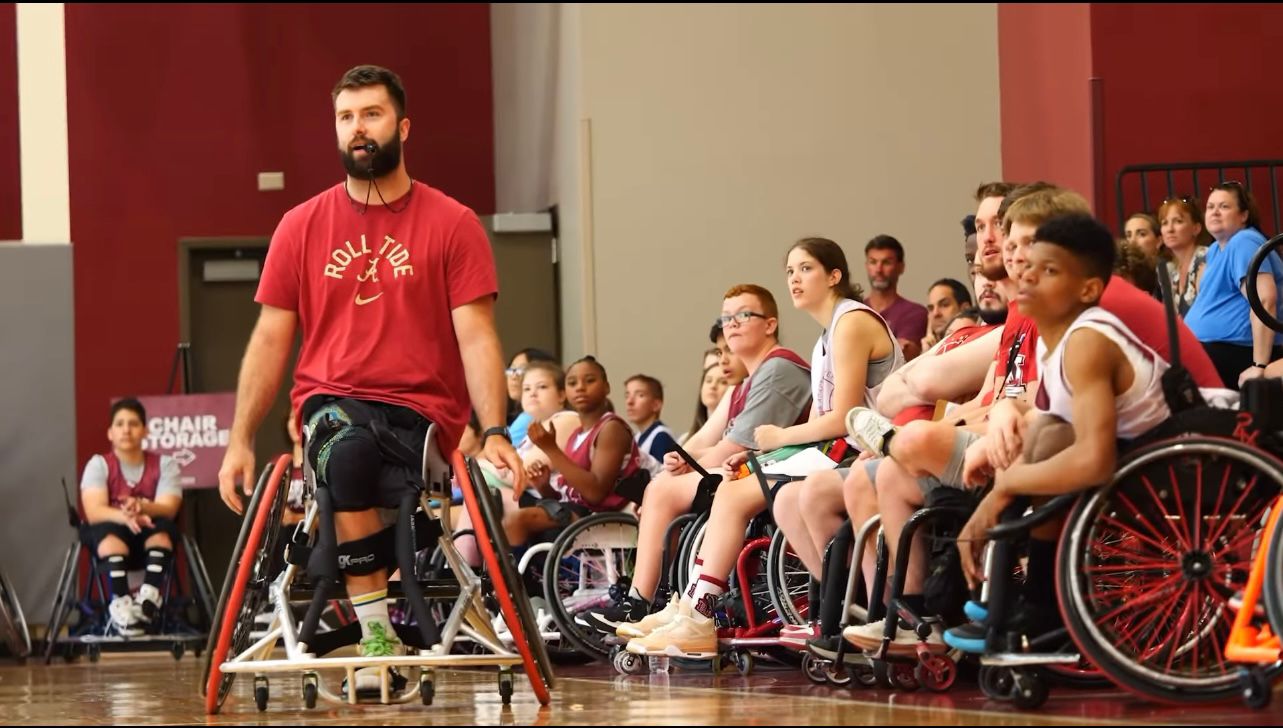
Michael Auprince has spent his life adapting, competing and leading — first as an elite wheelchair basketball player and now as an assistant coach for The University of Alabama men’s wheelchair basketball team. A new 3D-printed prosthetic leg cover is helping him do that work with confidence, while also showing how innovation can solve everyday problems.
Turning Challenges Into Opportunities
Auprince’s journey to Alabama wasn’t easy. Born with a congenital birth defect that left his leg extremely weak, he underwent several procedures that left it nearly nonfunctional. Choosing amputation at a young age became a turning point — opening the door to international competition and collegiate athletics he might never have imagined.
Even now, representing Alabama carries deep meaning, both as a former player and as an assistant coach.
“Alabama represents something bigger than myself or the team,” he said. “Wearing the script A as a player was special, and coaching with it is equally rewarding.”
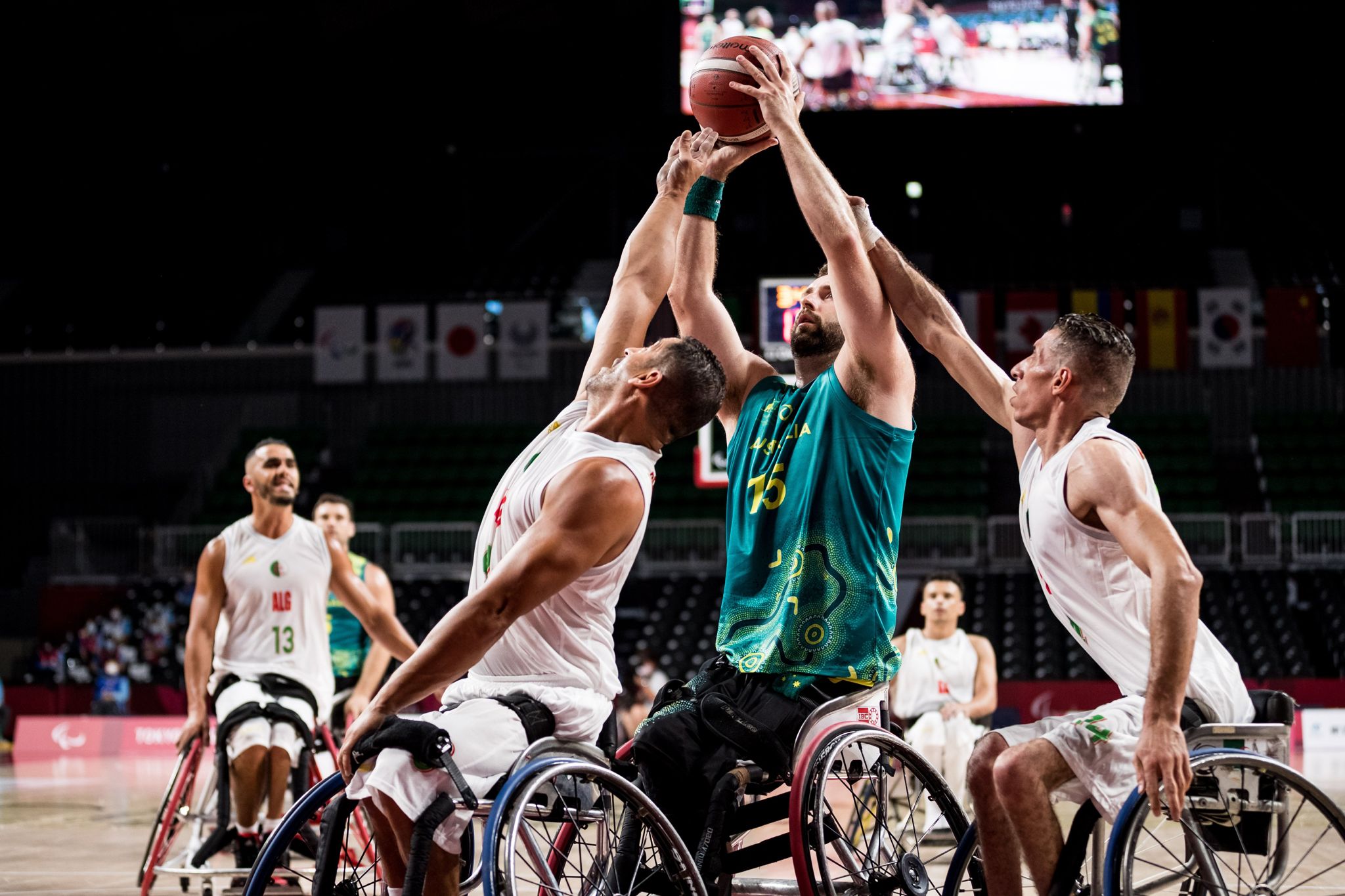
Auprince brings a global perspective to Alabama’s program, shaped by years of competing at the highest levels and now applying that knowledge as an assistant coach.
“I try to use all my experiences — Australian upbringing, Paralympics, professional play — to guide our athletes,” he said. “Coaching blends my love for teaching and basketball, allowing me to share knowledge while developing athletes.”
From Daily Frustration to Collaborative Innovation
Despite his success, Auprince faced a challenge many amputees know well: clothing damage caused by his prosthetic.
“I struggled with dress pants tearing over my prosthetic, which affected self-confidence and daily life,” he said.
That frustration led him to collaborate with Jesse Park, president of Tikkun Olam Makers, a student-led organization that designs practical assistive technology.
WATCH: Students Engineer Prosthetic Solution
“We focus on creating accessible assistive technology that addresses everyday challenges for people with disabilities,” Park said. “Assistive technology bridges gaps in daily life, and our goal is to create accessible solutions for lesser-known disabilities.”
One of the team’s first projects was a leg cover designed just for Auprince.
“Existing solutions were expensive and often ineffective,” Park said. “Using additive manufacturing, we designed a lightweight, two-shell leg cover that emulates a biological leg. It’s now fully customizable for any prosthetic and biological leg measurements. Combining additive manufacturing and frugal innovation allows us to create accessible, novel products that improve lives.”
The project relied on teamwork — both from engineers and non-technical members — and University resources like The Cube, which allowed them to produce larger, more complex parts than standard 3D printers.

“We prioritize consulting with the end user,” Park said. “Michael suggested emulating his biological leg, and we built prototypes, adjusted designs in CAD, and produced functional 3D-printed solutions.”
More Than a Product
For Auprince, the impact was immediate.
“It’s lightweight, customizable, and has improved my confidence, allowing me to focus fully on coaching,” he said. “This cover is simple, user-friendly, and cost-effective — something sorely needed for amputees.”

He believes the design could help amputees far beyond his own experience.
“It’s a solution that has the potential to impact amputees worldwide,” he said.
For Auprince, the prosthetic cover is more than just a piece of equipment. It’s a reminder of how teamwork, problem-solving, and creativity — whether on the court or in a lab — can change lives.