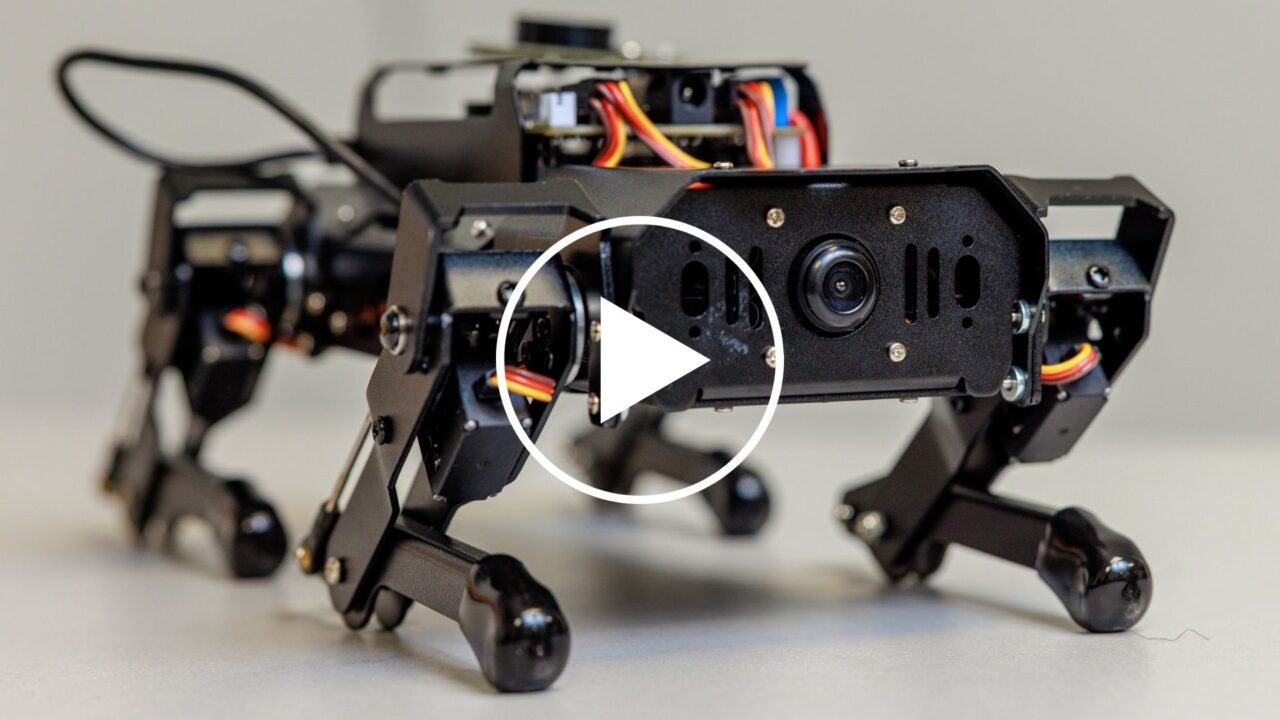
Inside the Human Technology Interaction Lab at The University of Alabama, researchers are exploring the latest in robotics and artificial intelligence — including a robotic puppy designed to spark curiosity and inspire the next generation of innovators.
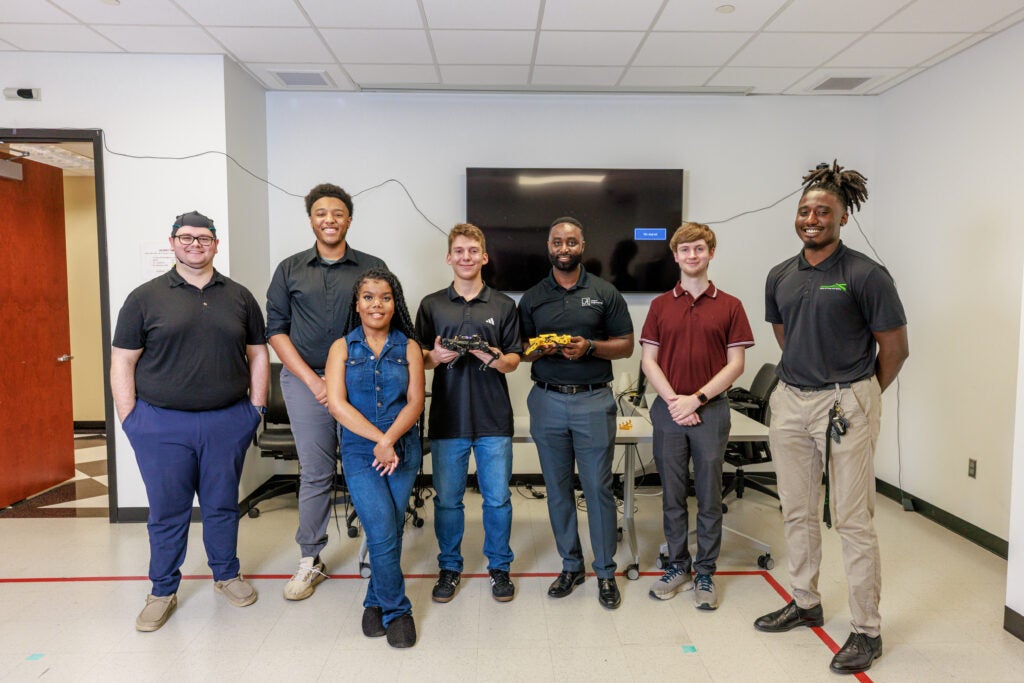
The lab is led by Dr. Chris Crawford, an associate professor in the Department of Computer Science. Crawford and his team study how technology can solve real-world problems, blending robotics, brain-computer interfaces and computer science education.
“In my job, I wear a few different hats,” Crawford said. “I teach courses like Introduction to Robotics, Brain-Computer Interfacing and our senior design capstone course. But I also run research projects that connect the lab to our community.”
Much of that community work involves visiting local schools and engaging middle and high school students with hands-on experiences in advanced technology.
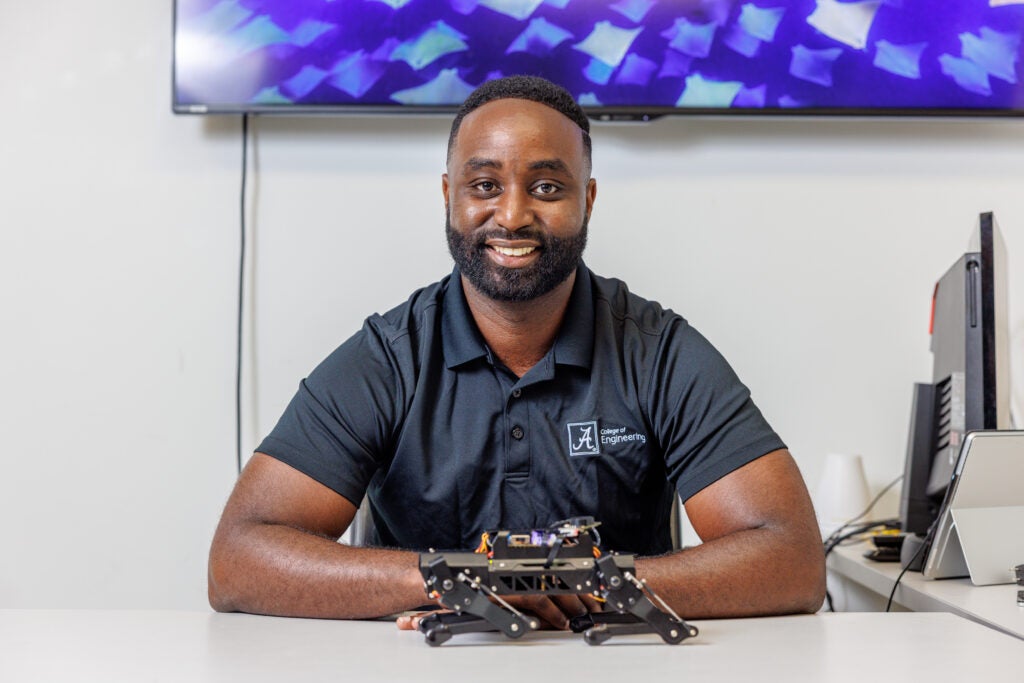
“One day, during an outreach visit, we asked students what kind of robot they’d like to program,” Crawford recalled. “One student said, ‘A puppy.’ That simple answer sparked an entire project. We went back to the lab, researched existing quadruped platforms and started exploring how students would react to a lifelike robot — something different from drones or wheeled robots.”
The result is PuppyPi, a four-legged, open-source robot designed with custom software that adds intelligence related to natural language understanding, helping teach students about robotics in a playful, interactive way.
Eli Weber, a recent computer science graduate, helped lead development on PuppyPi as part of his senior capstone computing project. His team focused on giving the robot the ability to understand and respond to voice commands, creating an AI-powered interaction system. The students affectionately nicknamed the robot Scuffy, which also serves as its wake word.
“Our goal was to make it smart enough to react naturally when users interact with it,” Weber said.
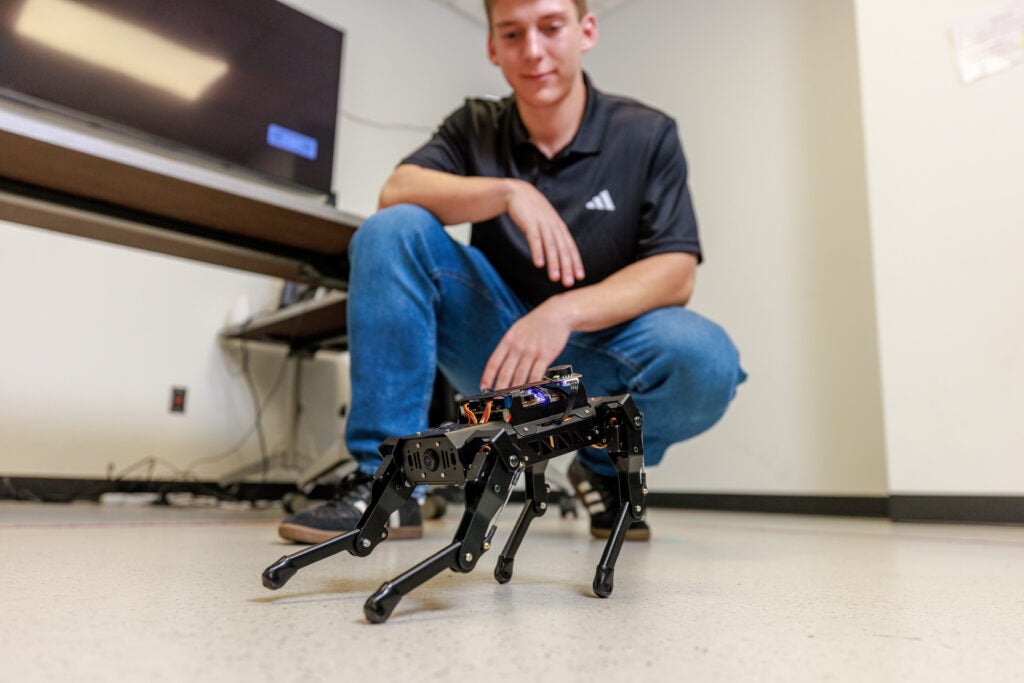
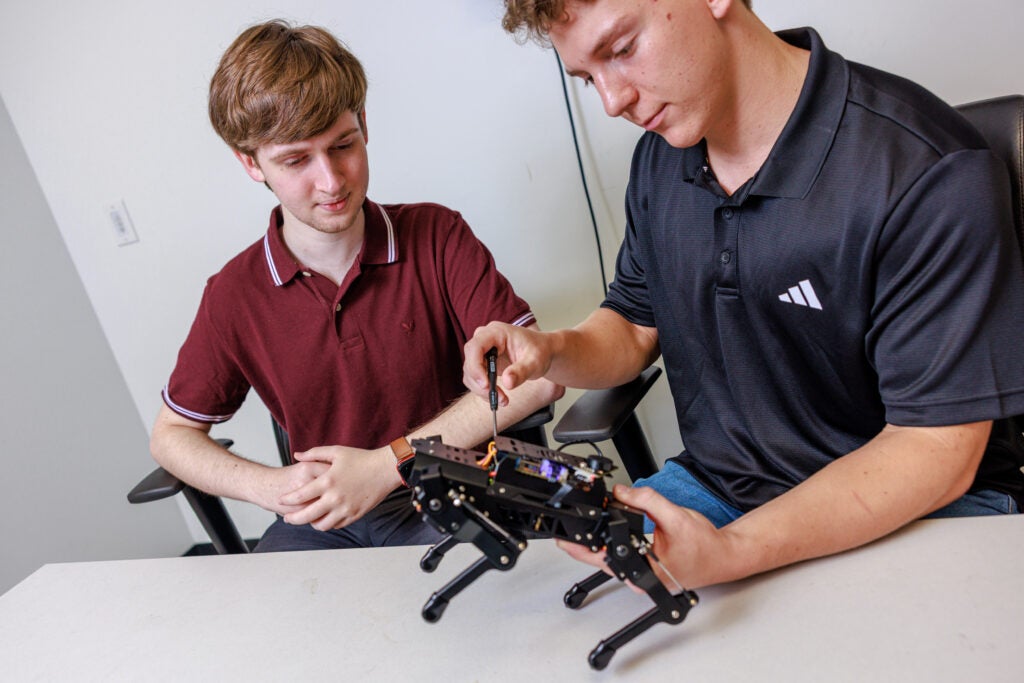
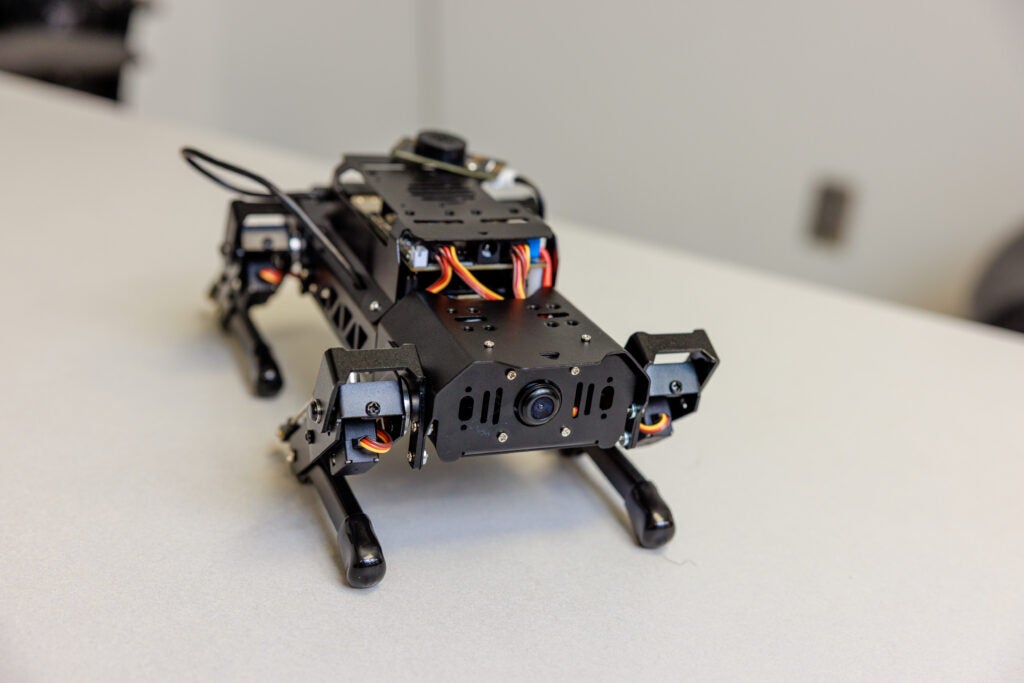
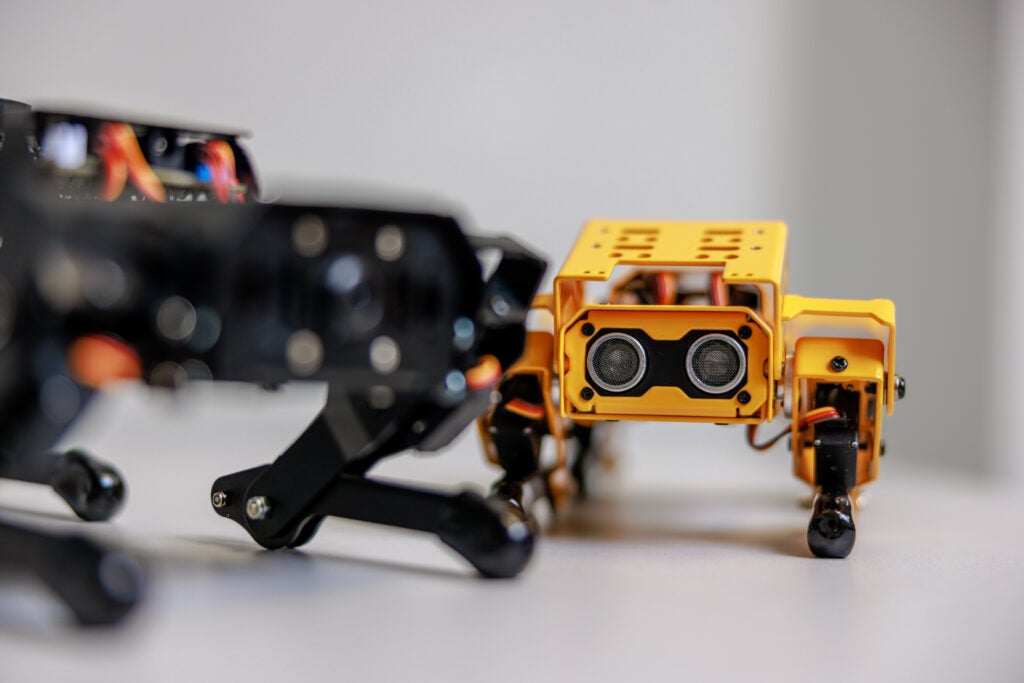
For the project, Weber’s team built an interactive system to handle voice commands. “The robot constantly listens for its wake word, ‘Scuffy,’” Weber explained. “When it hears that, it records what comes next and uses AI to decide what to do. Then it executes the command.”
Scuffy can sit, stand, walk, do pushups, detect colors, recognize faces and even shake hands with familiar people.
“For me, the most valuable part of the project was learning how to combine AI with robotics,” Weber said. “We took classical robotics skills and applied new AI tools to create something entirely new — a system that makes the robot responsive, intelligent and interactive.”
For Crawford, PuppyPi is about more than building a robot — it’s about giving students a venue to explore, imagine and create. As the lab continues to expand the platform, he hopes students across Alabama — from Tuscaloosa to rural schools in west Alabama — will have access to cutting-edge technology.
“Our goal isn’t just to make a robot,” Crawford said. “It’s to give students the tools to dream up and build whatever they can imagine.”